Iranian drones and missiles smash Kuwait's main airport, killing one
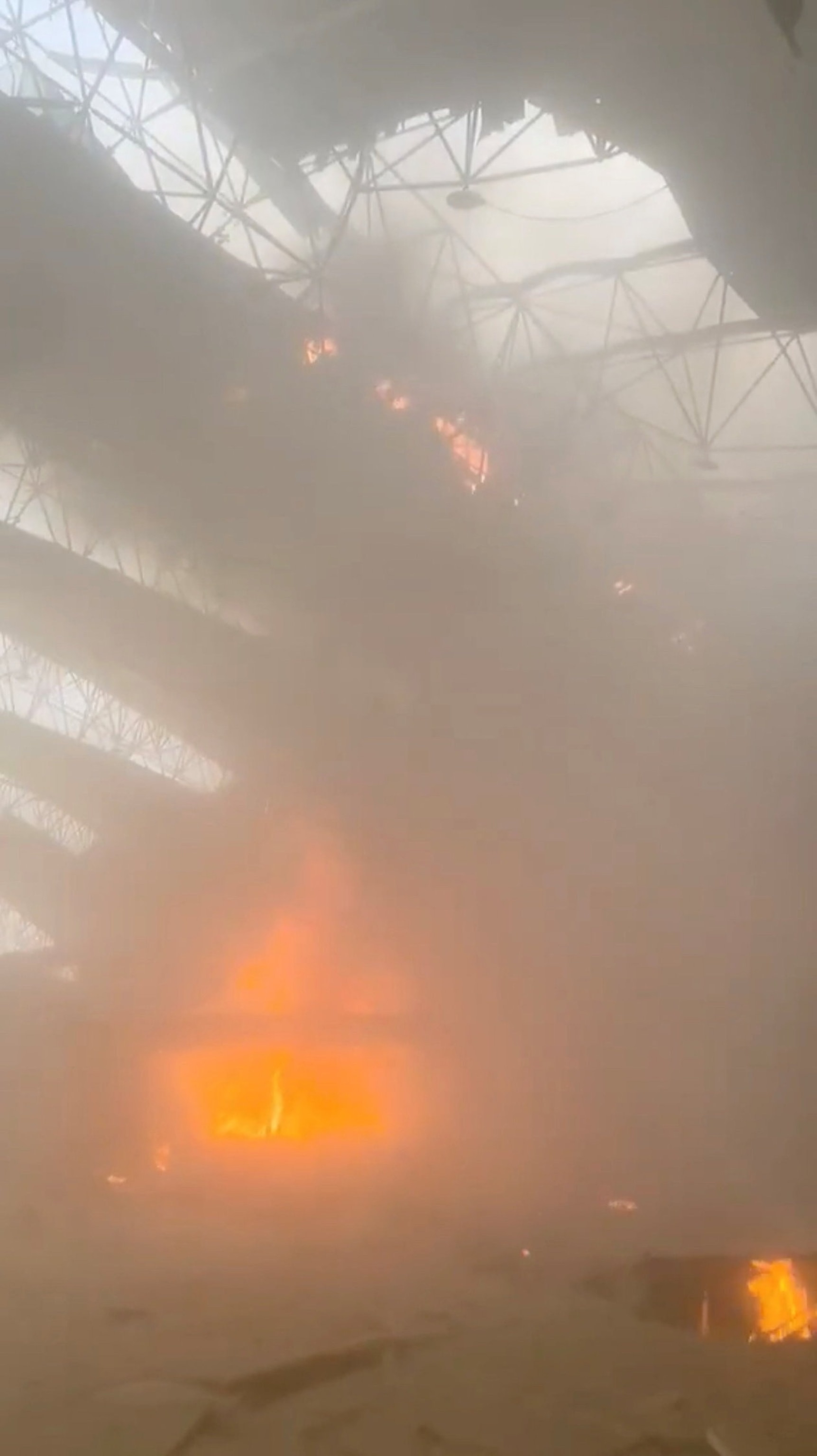
At dawn on Wednesday, Iran fired 13 ballistic missiles and 17 drones at Kuwait, with several breaking through air defenses and striking Terminal 1 of Kuwait International Airport. One person was killed and at least 63 were injured. The dead man was an Indian national, confirmed by India's foreign ministry. It is the first civilian fatality on Gulf soil since Washington and Tehran agreed in April to halt the war that began in February.
What happened
Kuwait's defense ministry said its batteries intercepted most of the salvo over residential districts west of the capital, but enough leaked through to gut the passenger building. Photos and video show a hole punched through the terminal's roof truss and active fires inside the check-in hall. The Health Ministry catalogued the wounds with unusual candor: fractures, head injuries, cerebral hemorrhages, amputations, smoke inhalation. Brigadier General Saud Abdulaziz Al-Otaibi, the ministry's spokesman, called it "criminal Iranian aggression." Iran's Islamic Revolutionary Guard Corps (IRGC) said it had aimed at the Ali Al Salem Air Base, a US installation outside Kuwait City, and at the US Navy's 5th Fleet headquarters in Bahrain — and that the airport hit was, in effect, what got through.
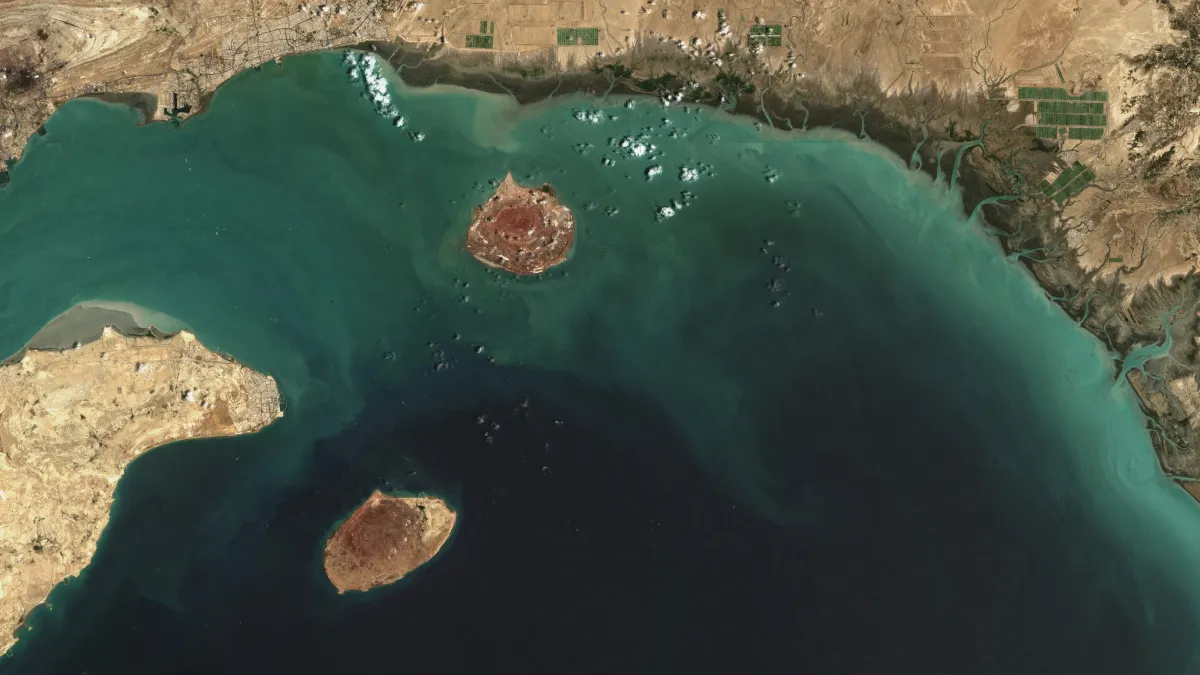
The IRGC framed the salvo as retaliation. Hours earlier, US Central Command struck air defenses, a drone ground-control station, and two attack drones on Iran's Qeshm Island, a militarized rock at the entrance to the Strait of Hormuz that analysts call Iran's "unsinkable aircraft carrier." Tehran also accused the US Navy of firing a missile into the engine room of an Iranian oil tanker that had tried to run Washington's open-ended shipping blockade. The blockade is the half-measure Trump kept in place when he extended the April ceasefire indefinitely instead of lifting it.
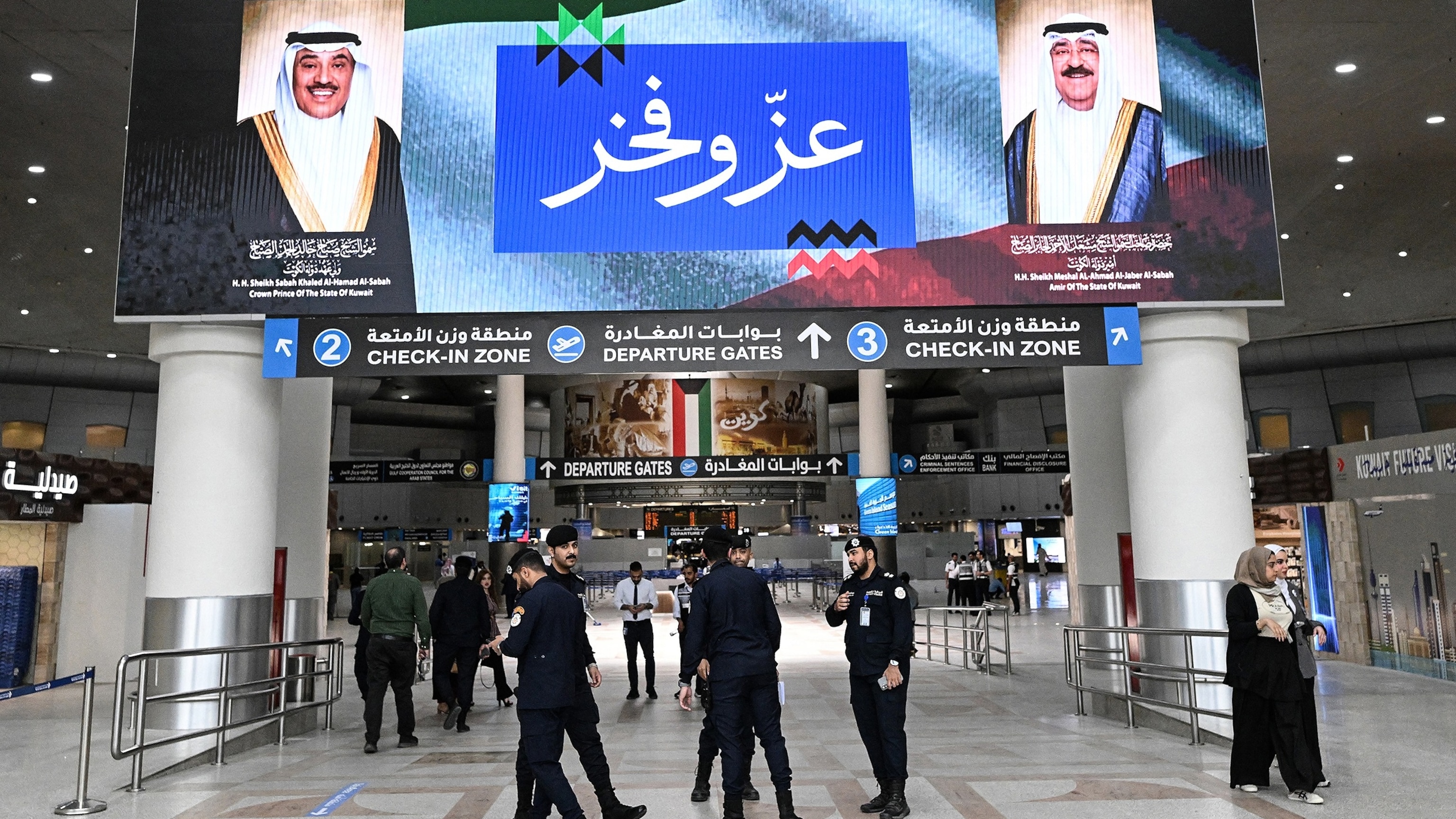
By midday, Kuwait routed all flights through Terminal 4 and Kuwait Airways resumed full service; IndiGo of India suspended its Kuwait runs through June 4. Neither Washington nor Tehran has formally declared the ceasefire dead.
Why it matters
The April truce was always a thin one. Iran stopped talking to the mediators earlier this week. The US blockade kept squeezing Iranian crude. The IRGC kept rattling at the Strait of Hormuz, the chokepoint that carries roughly a quarter of seaborne oil and a fifth of liquefied natural gas. What Wednesday's strike did was turn that slow grind into a body count on the ground — and not a US or Israeli body, but a Kuwaiti airport worker and an Indian guest worker. Gulf governments that had quietly tolerated the blockade now have a domestic political reason to demand it be lifted.
The escalation logic from here is well-rehearsed. Iran cannot match the US Navy in the strait, so it reaches for soft targets onshore: airports, oil terminals, the airbases that host American jets. Washington answers with precision strikes on the launch infrastructure. Each round leaves the ceasefire technically alive, because neither side wants to own the collapse, and a little deader in practice. The skeptical counter is that this is exactly the pattern of the last six weeks — noisy but bounded. The new thing is the location: a civilian terminal in a country that is supposed to be on the sidelines.
For businesses that route people and cargo through the Gulf, the immediate read is that the war-risk insurance premium that briefly normalized after April is back. The London hull-war underwriters had been quoting Gulf transits at near pre-war rates as recently as last week. Expect those to widen again within days.
What to watch
The next signal is whether the Gulf Cooperation Council issues a joint statement demanding an end to the US blockade — Saudi Arabia and the UAE have so far stayed silent in public. After that, watch Iran's parliament: a non-binding vote to close the Strait of Hormuz has been parked since May and could be revived to give Tehran a bargaining chip without committing to actually shutting traffic. And watch the price of Brent at the Asian open on Thursday. Anything north of a 4% jump means the market is starting to price in real closure risk, not just headline risk.
Sources
- Al Jazeera — Iranian drone hits Kuwait's main airport after US strikes Qeshm Island
- ABC News — Iran live updates: Iran targets US forces, Kuwait airport amid ceasefire
- CBS News — Live updates: Trump Iran war attacks Kuwait airport Israel Hezbollah ceasefire
- Euronews — Iranian drone attack causes heavy damage to Kuwait airport
- The National — Kuwait suspends commercial flights after Iranian drones hit airport terminal
- India TV News — Why US hit Iran's Qeshm Island in fresh strikes