Meta builds AI data centers in fabric tents to skip grid waits
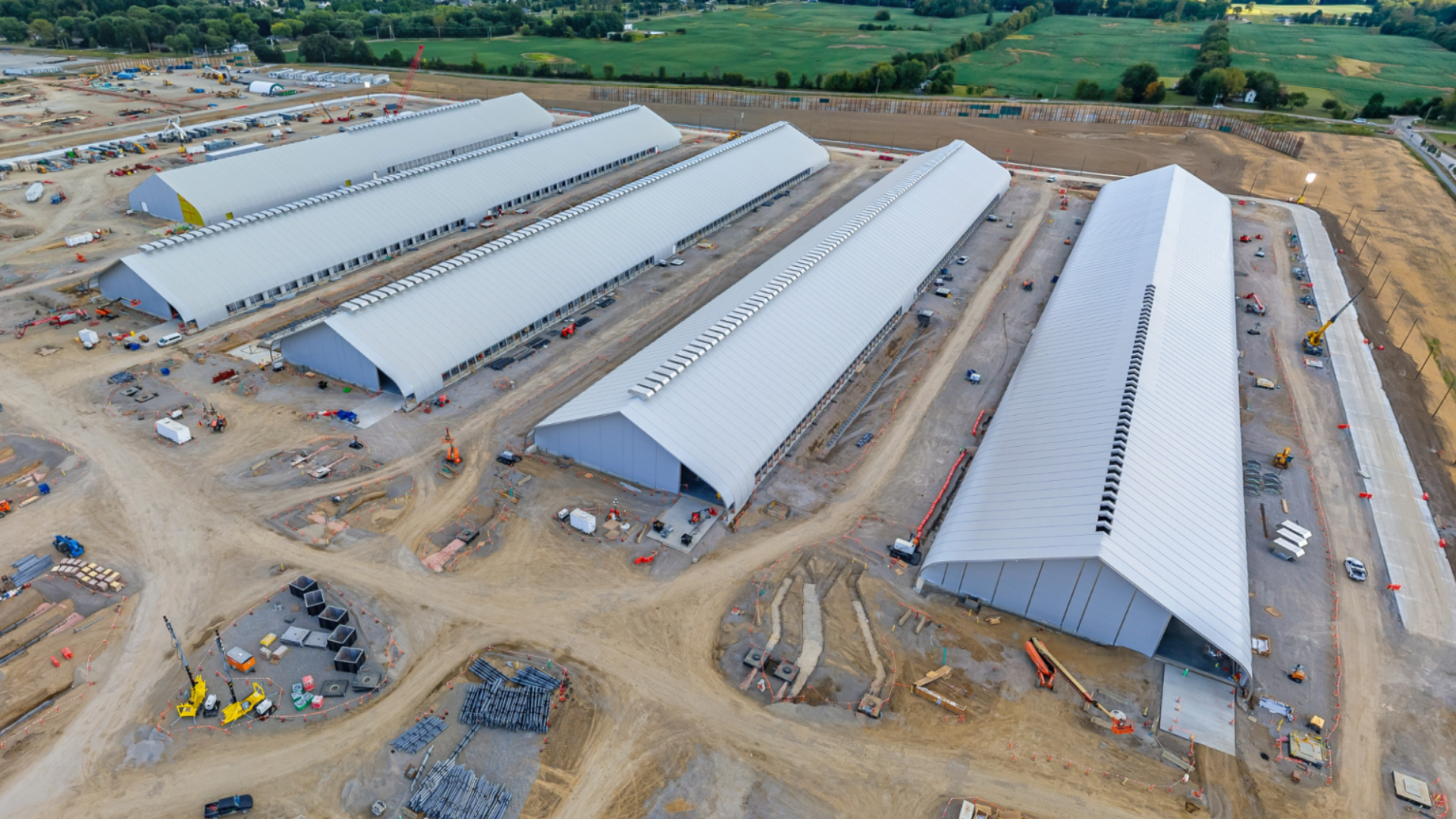
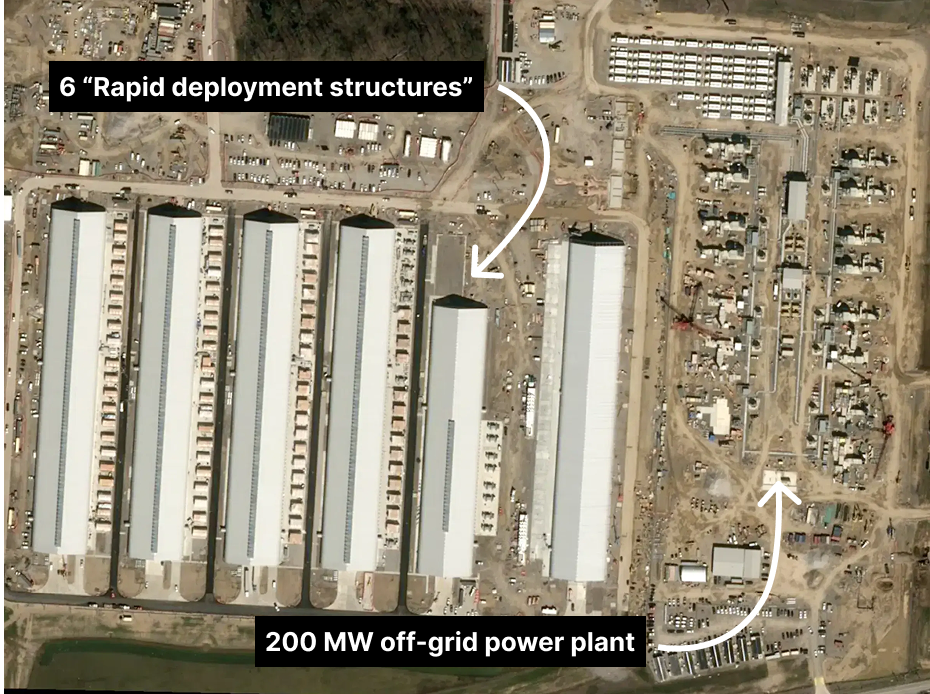
Meta has erected six fabric tents to house AI chips at its New Albany, Ohio campus, according to satellite imagery and city permits surfaced June 4 by Cleanview founder Michael Thomas. Each structure is roughly 125,000 square feet, and all six went up between April and June 2026, replacing a two-to-three-year build cycle with a roughly three-month one. To power them, Meta is bypassing the local utility with a $1.6 billion behind-the-meter gas plant next door.
The tents
Meta does not call them tents. Its official term is "rapid deployment structures," a name borrowed from the Tesla playbook. Elon Musk used the same fabric-shell trick to stand up Gigafactory expansions in months, and xAI later applied it to its Memphis Colossus cluster. The pitch is the same in each case: skip the 18-to-36-month permitting, steel, and concrete cycle of a hardened data hall, and fill a metal-framed tent with racks while the slab on the building next door is still curing.
Cleanview's Thomas, who reviewed the city permits and a fresh satellite pass, called the discovery the moment "the AI race officially entered its Mad Max phase." Permits filed with New Albany show the tent slabs were poured in April; recent satellite imagery shows the structures roofed and the racks rolling in. Thomas said the same approach is now visible at two more Meta sites, including one in Tennessee, putting the count at three campuses and counting.
Powering the Ohio tents takes Meta off the local grid entirely. Thomas reported a 10-year agreement with pipeline giant Williams to build two 200-megawatt natural-gas plants next to the New Albany site, a roughly $1.6 billion behind-the-meter setup. Behind-the-meter means the generator sits on Meta's side of the utility meter, so the electrons never touch the public grid: Meta avoids the multi-year interconnection queue, but it also gives up the grid as a backup if the gas plant trips. Modular gas turbines are the same off-grid trick xAI used at Colossus, which drew an air-quality lawsuit from neighbors in Memphis earlier this year.
Why it matters
The tents are a tell. A company sitting on $145 billion of planned data-center spending choosing fabric and behind-the-meter gas over concrete and utility power is conceding that the bottleneck has moved from money to time. Mark Zuckerberg said as much on The Information's podcast last year, naming compute build-out as Meta's hardest infrastructure problem. Each H100-class chip running inside the tents costs roughly $60,000, and Thomas estimates Meta plans to put billions of dollars of them under a fabric roof with no generator redundancy and limited climate hardening.
That trade is not free. A tent shell will not survive what a concrete hall will: tornado season in Ohio, a roof leak above a $5 million rack, a gas-turbine trip with nothing else feeding the bus. Meta has not said how it plans to insure or harden the structures, and the company has not publicly confirmed Thomas's count of three campuses.
For the rest of the industry, the signal is clearer than the trade. If Meta, historically one of the more cautious hyperscalers about physical design, is willing to ship compute under a tent, every other AI lab racing to put more frontier-grade GPUs into production will feel the pull. Expect more behind-the-meter gas deals, more permitting end-runs, and more arguments at state public utility commissions about what a "data center" even is.
What to watch
The next signal is Williams's filings. The 10-year, two-plant deal at New Albany has not yet appeared in a Williams investor disclosure or a FERC filing, and a public filing would confirm the contract structure and the start date of the second 200 MW unit. After that, watch Meta's next earnings call for any update on tent count or the API timeline for Muse Spark, the model the Wall Street Journal reported is complete but unshipped, and the most likely workload for whatever those tents end up holding.
Sources