Microsoft launches its own AI models, easing OpenAI dependence
Microsoft used the Build 2026 keynote on Tuesday to ship something it has been promising for two years: a stack of foundation models trained without a single byte of OpenAI distillation. The headliner, MAI-Thinking-1, is the company's first in-house reasoning model. A second model, MAI-Code-1-Flash, started rolling out inside GitHub Copilot the same day.
What Microsoft actually shipped
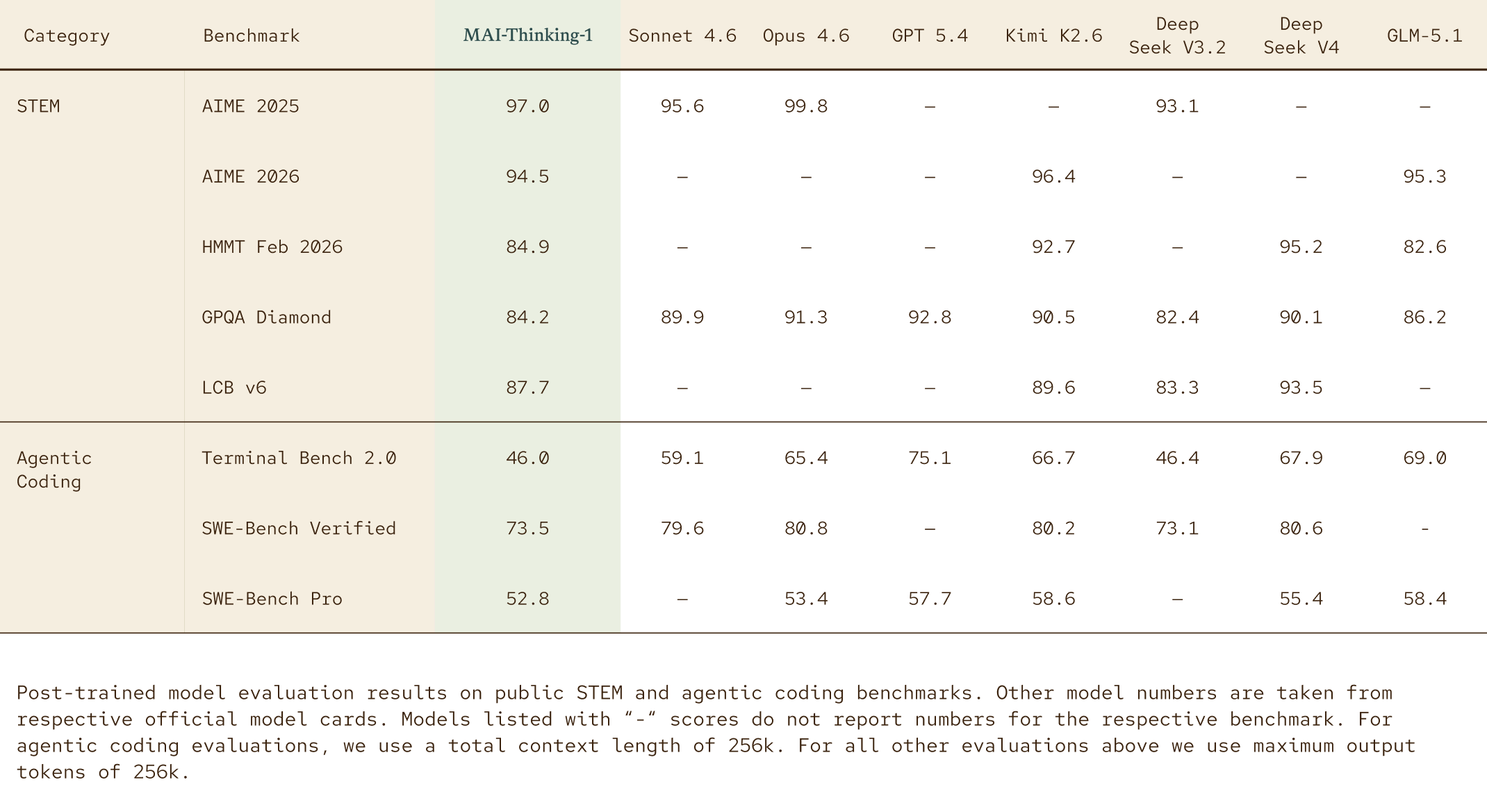
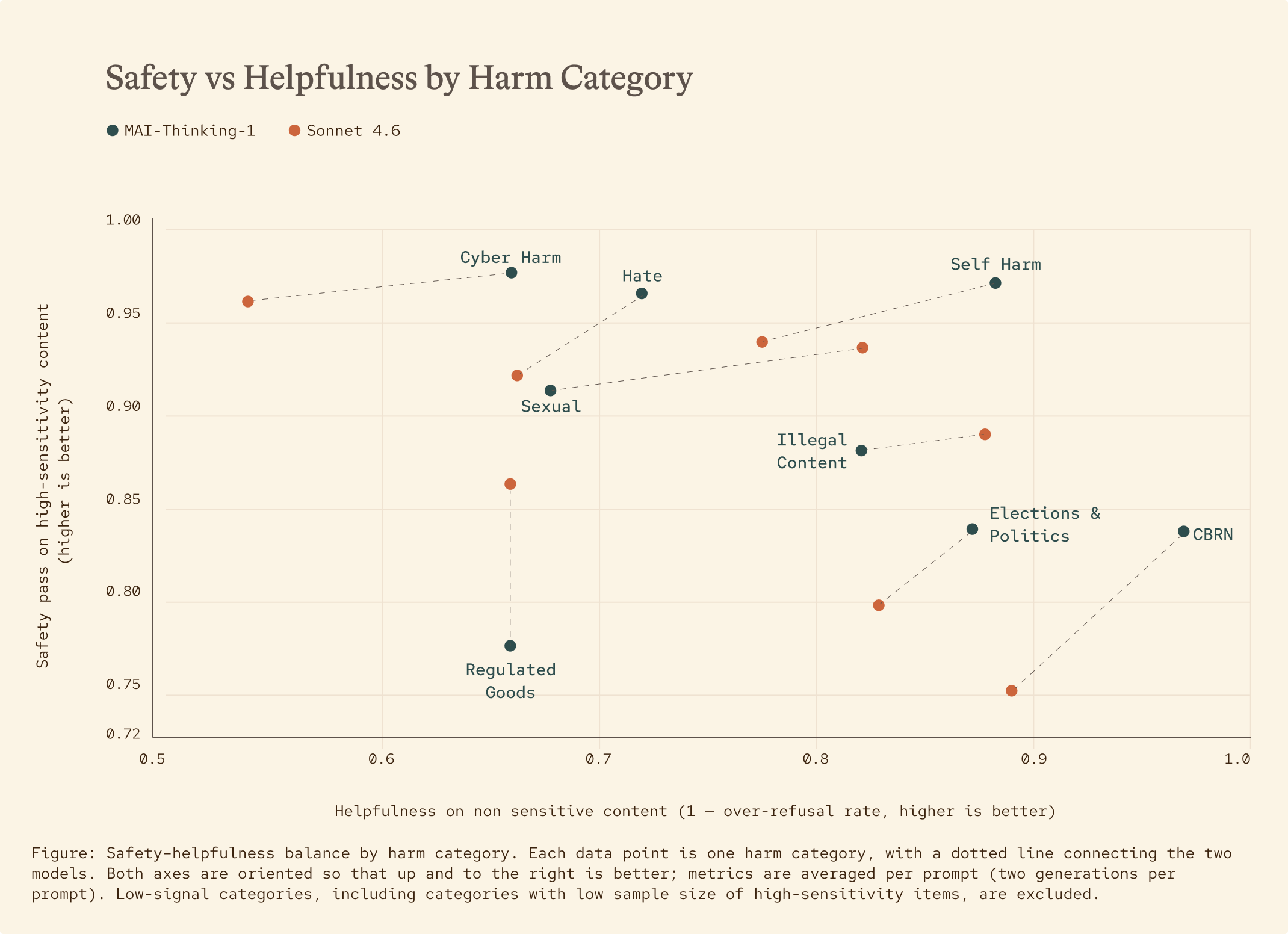
MAI-Thinking-1 is a sparse Mixture-of-Experts model with 35 billion active parameters (roughly a trillion total) and a 256,000-token context window (long enough to fit about a 600-page document in one pass). Microsoft says it was trained from scratch on commercially licensed enterprise data, with no distillation from any third-party frontier model. That is a direct shot at the industry-standard practice of bootstrapping new models on GPT or Claude outputs. On Microsoft's own benchmark table the model posts 97.0% on AIME 2025 and 94.5% on AIME 2026 (graduate-level math contests where each question has one integer answer), and matches Anthropic's Claude Opus 4.6 on SWE-Bench Pro, the harder real-world coding benchmark that grades fixes against actual GitHub issues. In blind side-by-side ratings run by Surge, human raters preferred its answers to Claude Sonnet 4.6's.
The companion model, MAI-Code-1-Flash, is a 5-billion-parameter coding model now rolling out to every GitHub Copilot tier (Free, Pro, Pro+, and Max). Microsoft claims it uses up to 60% fewer output tokens on the hardest coding tasks at comparable accuracy, which translates directly into lower latency and lower bills for Copilot users.
Why it matters
For three years Microsoft's AI strategy was OpenAI's strategy with a different sales motion. The Build keynote is the first time Microsoft has presented a credible alternative, built by its in-house Microsoft AI Superintelligence Team under Mustafa Suleyman, that can plausibly serve the same workloads Azure customers were buying GPT for. MAI-Thinking-1 enters Microsoft Foundry's private preview today, then opens up via Fireworks AI, Baseten, and OpenRouter. That distribution choice is the tell: Microsoft wants its model on the same inference rails developers already use for open-weight alternatives, not gated behind Azure.
The "no distillation" line is also a legal hedge, not just a flex. The New York Times and a growing list of plaintiffs argue that OpenAI ingested copyrighted text without licenses; a model demonstrably trained on cleanly licensed corpora is far easier to indemnify for enterprise buyers. Microsoft is selling that defensibility as hard as it is selling tokens.
The strongest counter: every published number is self-reported, the model is only in private preview, and independent SWE-Bench and AIME runs from neutral labs do not yet exist. The Surge preference test compared MAI-Thinking-1 to Sonnet 4.6, Anthropic's mid-tier model, not to Opus 4.6 or GPT-5.4. Microsoft's own table still shows Opus 4.6 leading on SWE-Bench Pro by a clear margin.
What to watch
The next signal is OpenAI's response. Microsoft remains OpenAI's largest commercial backer through Azure and a multi-billion-dollar equity stake, but contractually each side is now free to compete with the other. Watch for an OpenAI pricing move on GPT-5 inference within two weeks, and watch whether Anthropic's confidential S-1 filing from Monday pushes it to publish the SWE-Bench Pro numbers Microsoft just put on a slide.
Sources