Pancreatic cancer pill doubles survival in Phase 3 trial
For the first time in any Phase 3 trial in pancreatic cancer, a single pill has roughly doubled how long patients live. Revolution Medicines' daraxonrasib pushed median overall survival to 13.2 months, up from 6.7 months on standard chemotherapy, in 500 previously treated patients with metastatic disease. The hazard ratio was 0.40 (p < 0.0001), meaning a 60% reduction in the risk of death.
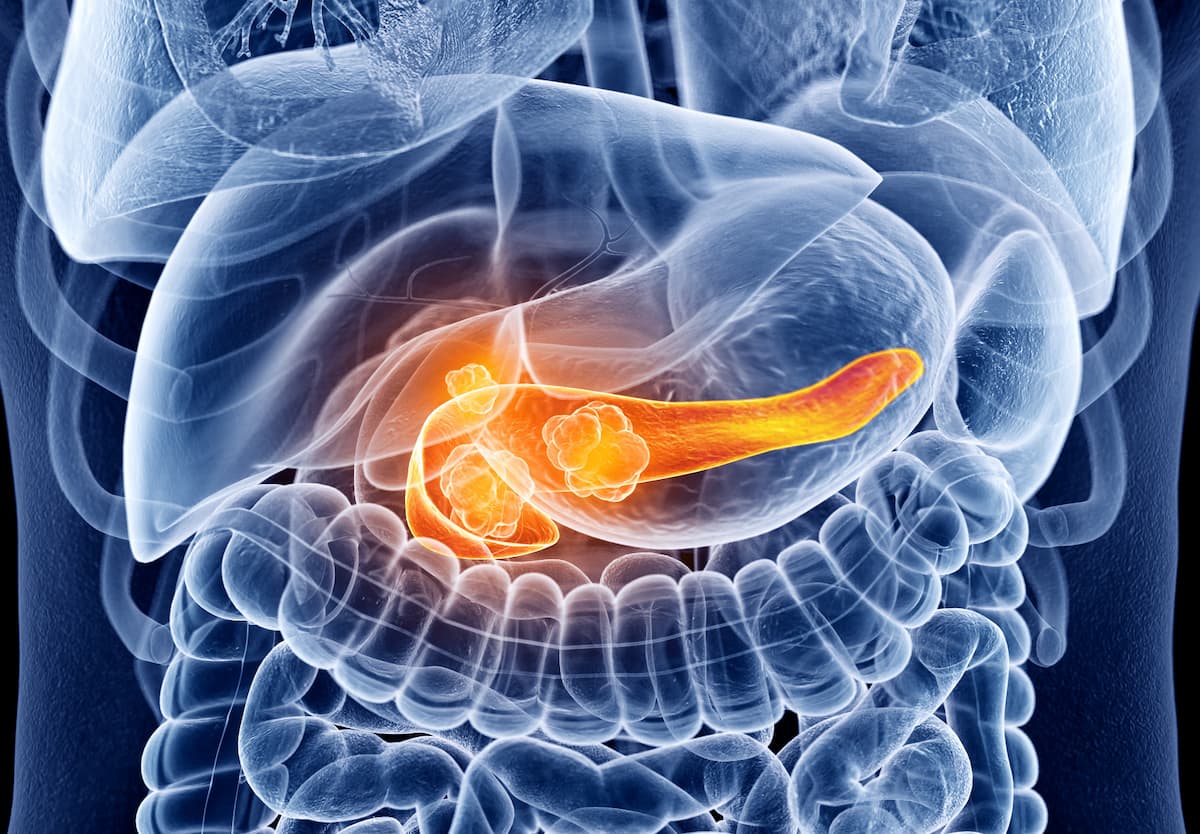
A drug that finally hits the right target
Pancreatic ductal adenocarcinoma (PDAC) is the deadliest common cancer in the United States, with a five-year survival rate around 13%. The reason is mostly one gene: about 90% of PDAC tumors carry a mutation in KRAS, an oncogene that drives uncontrolled growth. For four decades KRAS was considered "undruggable" — the protein has no obvious pocket for a small molecule to wedge into.
Daraxonrasib (formerly RMC-6236) gets around that by binding KRAS only when it is in its active, signaling state (the "RAS(ON)" conformation), and by hitting multiple RAS variants at once rather than one specific mutation. That breadth is the point: where earlier KRAS drugs like Mirati's adagrasib only worked on tumors carrying the rare G12C mutation, daraxonrasib worked across the much larger G12 family, which covers most pancreatic tumors.
The numbers behind the standing ovation, as presented at the ASCO 2026 plenary on May 31 and published simultaneously in the New England Journal of Medicine: in the RAS G12-mutant subgroup, progression-free survival was 7.3 months on daraxonrasib versus 3.5 months on chemotherapy; the objective response rate (tumors that measurably shrank) was 33.2% versus 11.8%. Patients took one 300 mg pill a day. The audience cheered, whistled, and clapped for 42 seconds straight when lead investigator Brian Wolpin of Dana-Farber showed the survival curve.
Why the room stood up
Pancreatic cancer is the case where oncologists have been almost numb to bad data. Median survival for metastatic disease has barely moved in 15 years. Every previous trial has shaved off a few weeks at best, or failed outright. A doubling of overall survival, in a Phase 3 with 500 patients, is in a different category.
It is also one of the cleanest tolerability profiles seen in late-stage oncology. Grade 3 or worse side effects were 43.6% on daraxonrasib versus 57.5% on chemotherapy, and only 1.2% of patients on the pill quit because of side effects, versus 11.2% on chemo. "These results are landscape-changing," said Rachna Shroff of the University of Arizona Cancer Center. ASCO chief medical officer Julie Gralow, in a press preview, called it a "grand slam" for patients and trialists alike.

Why it matters
The strongest counter is that 13.2 months is still 13.2 months. This is second-line therapy for patients whose first chemo regimen already failed; nobody is calling pancreatic cancer survivable. And daraxonrasib is a targeted drug for a specific genetic subgroup — patients without a RAS mutation appear to benefit far less. Revolution Medicines has not yet published a price; analogous targeted oncology drugs run $15,000–$25,000 per month, which will land in payer fights almost immediately.
What is harder to argue with is the trial design and the magnitude of effect. A hazard ratio of 0.40 in a 500-patient randomized Phase 3 in PDAC is the kind of number drug developers spend careers chasing and rarely see. It is also a proof-of-concept that the RAS(ON) class — Revolution has several follow-on molecules in earlier trials — works across the broader RAS-mutant tumor space, which includes much of colorectal and non-small-cell lung cancer. RVMD shares rose more than 20% on the data.
What to watch
Revolution Medicines has said it will file daraxonrasib for FDA approval in second-line PDAC in 2026, with a likely decision in 2027. The FDA has already opened an early access program, so some patients can get the drug now under physician request. The bigger readout is RASolute 303, the first-line trial in newly diagnosed metastatic pancreatic patients — if the survival benefit holds there, the standard of care for PDAC changes wholesale. Watch for an interim look in 2027.
Sources
- Revolution Medicines press release — May 31, 2026
- NEJM — Daraxonrasib or Chemotherapy in Previously Treated Metastatic Pancreatic Cancer
- ASCO press release — multi-selective RAS inhibitor nearly doubles survival
- STAT News — Revolution Medicines starts early access program
- CancerNetwork — Daraxonrasib shows "unprecedented" survival in pretreated pancreatic cancer
- ASCO Post — Daraxonrasib nearly doubles survival
- Oncology News Central — standing ovation at ASCO 2026
- PanCAN — first RAS inhibitor extends survival in PDAC