Trump Weighs Direct US Equity Stake in OpenAI and xAI
President Donald Trump told reporters aboard Air Force One on Friday that his administration is exploring direct US government equity stakes in OpenAI, xAI, and other large AI companies, endorsing a framework that progressive Senator Bernie Sanders introduced as a bill three days earlier. The rare left-right alignment turns a fringe nationalization idea into an active White House conversation — and puts every AI cap table on notice.
What Trump actually said
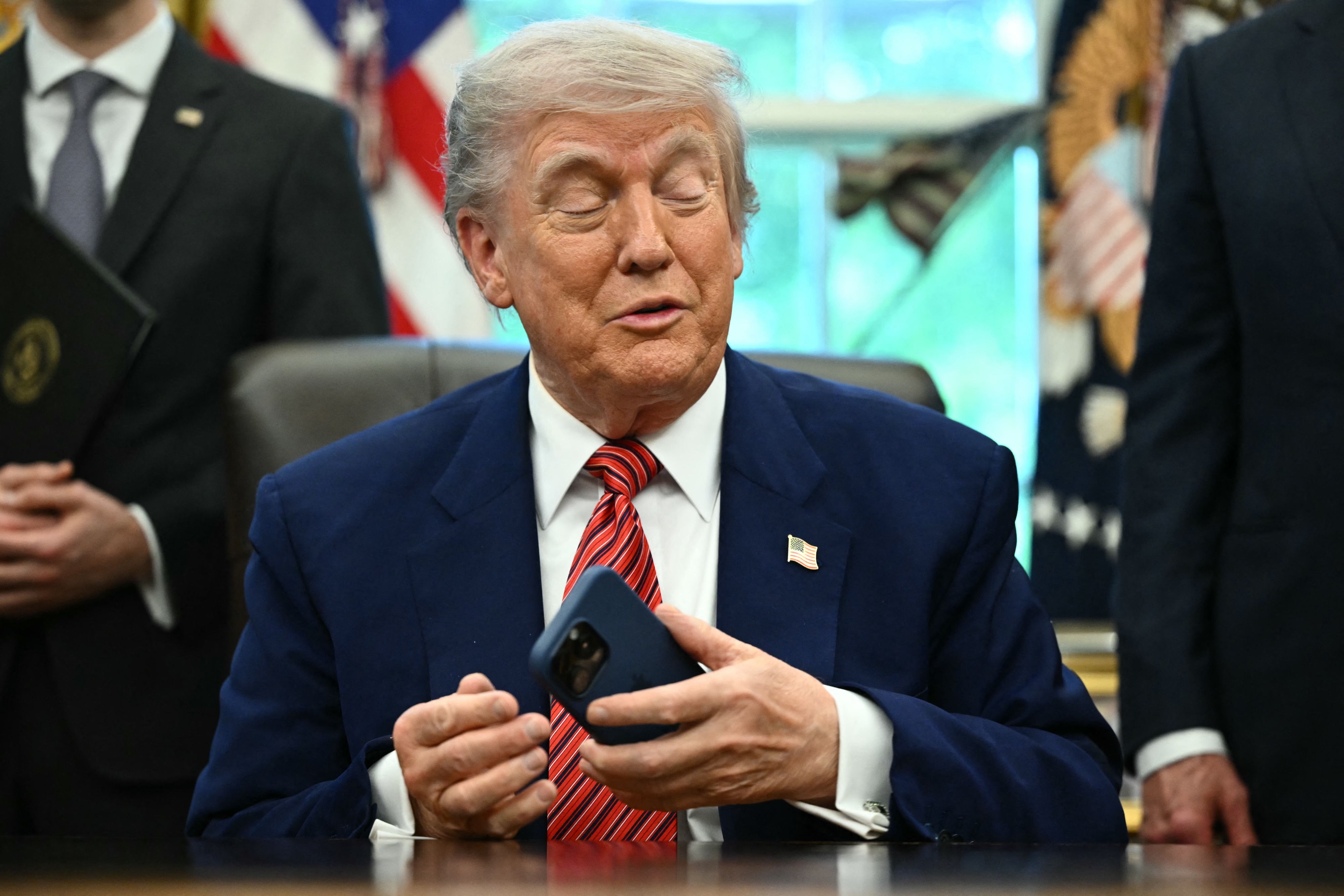
Asked Friday morning about the proposal, Trump said there are "concepts where pieces could be given to the American public, where the American public essentially becomes a partner with the companies," and called the idea "very interesting." A separate Fortune readout has him saying, "You make them a partnership in this revolution. It would be a beautiful thing." David Sacks, who co-chairs the President's Council of Advisors on Science and Technology, warned that "nationalization of AI will accelerate the corporate-government fusion we're already sliding toward."
The talks are not new. Sam Altman first pitched the idea to the Trump administration in early 2025 and revisited it in DC last week. What changed is that Trump is now saying yes in public.
The Sanders bill, in plain numbers
On June 2, Sanders introduced the American AI Sovereign Wealth Fund Act. The mechanics are blunt:
- A one-time 50% equity tax on the largest US AI firms, paid in shares rather than cash.
- The shares go into a public fund that gives ordinary Americans voting rights, board representation, and eventually dividend checks.
- The model is Norway's oil fund and Alaska's Permanent Fund, applied to AI rents instead of natural resources.
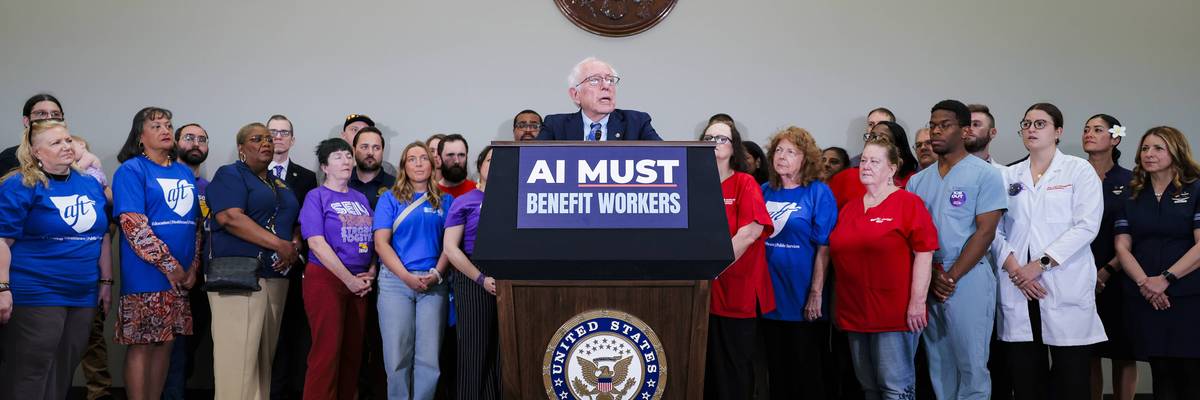
Sanders frames it as a transfer rather than a grab: the labs trained on humanity's "books, songs, artwork, journalism, computer code, scientific research," so the upside should not land entirely with billionaires and VCs.
There is already a precedent
The Trump administration spent $8.9 billion buying 433.3 million Intel shares at $20.47 in August 2025, a 10% stake with passive ownership and no board seats. That gives the White House a working template for AI: take equity instead of writing more CHIPS-style checks, and frame it as the public capturing upside on its own subsidies. Sanders' 50% is five times Intel's stake, but the precedent makes a smaller number (say, the Intel-shaped 10%) sound moderate by comparison.
One company is conspicuously not in the conversation: Anthropic. Trump ordered federal agencies to stop using its models in February after Anthropic refused to drop safety guardrails for a Pentagon deployment, and the freeze appears to have carried into the equity talks. The White House has not said whether Anthropic would be exempted from any tax, but in practice it is being treated differently from OpenAI and xAI right now.
Why it matters
For founders, the math under a 50% one-time equity tax is brutal: a $500 billion private valuation funds a $250 billion silent partner who can outvote the cap table. Even a 10% Intel-style stake reprices every late-stage round, because every new investor is now negotiating dilution against a known future government slug. Expect IPO bankers, including the ones working on Anthropic's confidential S-1 filed June 1 at a $965 billion valuation, to start pricing in a political-risk discount.
For users, the framing also matters. The companies arguing loudest for permissionless deployment will now be doing it as partial wards of the state. The pitch that frontier AI needs to outrun regulation gets harder when the regulator owns the stock.
The counter is fiscal: OpenAI projects $44 billion in cumulative losses through 2029, and xAI lost $6.4 billion on $3.2 billion in revenue in 2025. A government stake at today's valuations could be a stake in a money-losing balance sheet, not a windfall. That is the line MAGA-skeptical voices like Steve Bannon are already running with.
What to watch
The next signal is Sanders' bill clearing committee text and getting a co-sponsor list. A Republican name on it would force the White House to either back the bill or explain why "very interesting" stopped at the Air Force One press gaggle. Watch Altman's next Capitol Hill visit for which number (10%, 25%, 50%) anyone in the room is actually willing to say out loud.
Sources
- The Trump administration might take an equity stake in OpenAI — TechCrunch
- MAGA hates AI, but Trump agrees with Bernie it might be time for partial government ownership — Fortune
- Sanders Sovereign Wealth Fund Plan Would Give US Public 'Direct Ownership Stake' in AI Giants — Common Dreams
- US government to take 10% stake in Intel with CHIPS funding — CNBC
- Anthropic raises $65 billion, nears $1T valuation ahead of IPO — TechCrunch