Ukrainian Drones Pummel St. Petersburg as Putin Rebuffs Talks at Showcase Forum
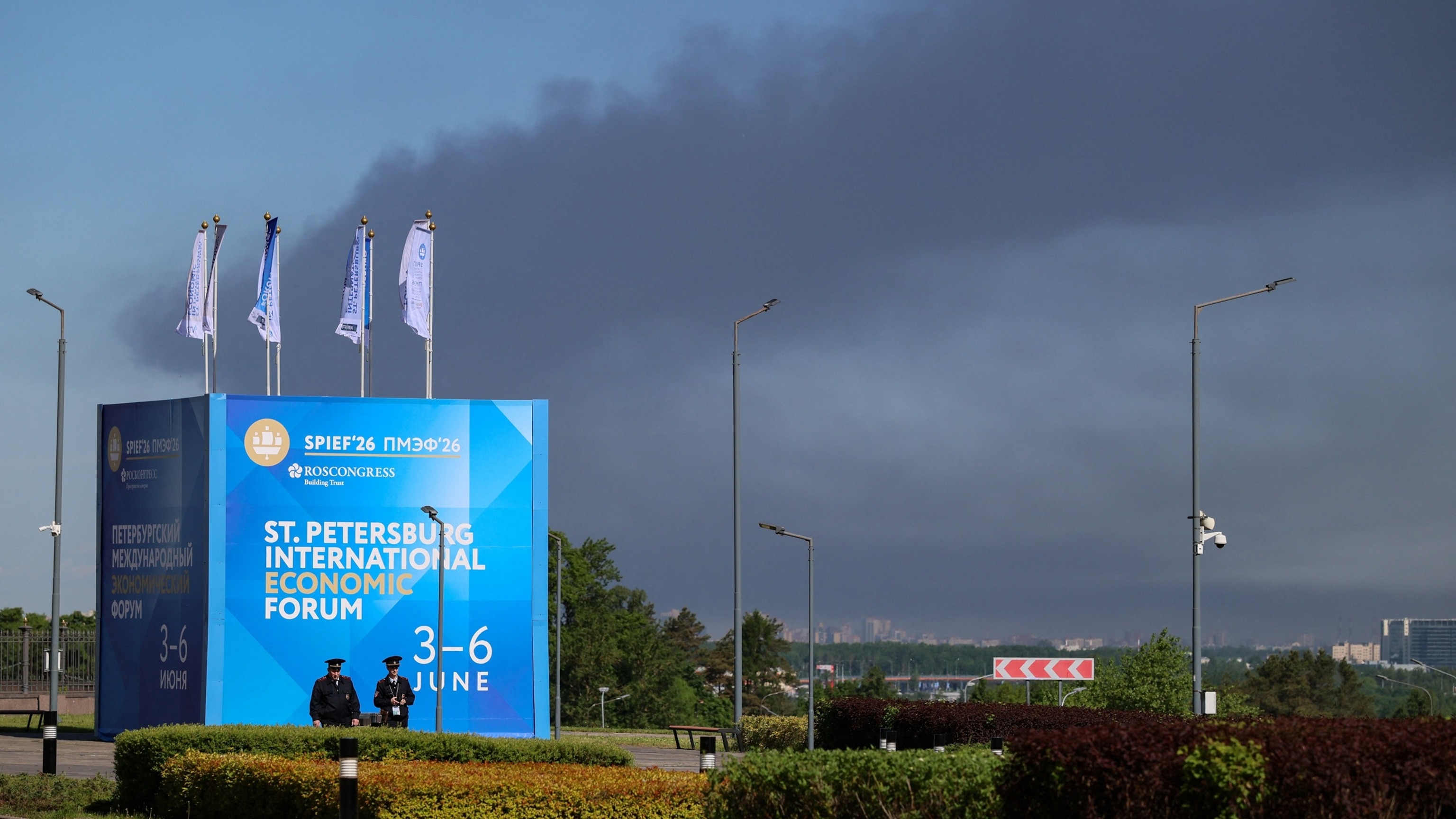
A long-range Ukrainian drone strike set Russia's biggest oil transshipment terminal in St. Petersburg ablaze on June 3, hours before Vladimir Putin's signature economic forum opened in his hometown. Three days later, on the forum's closing Saturday and hours after Putin publicly refused Volodymyr Zelensky's offer to meet, a second wave struck a defense ministry facility and forced Pulkovo, Russia's second-busiest commercial airport, to halt flights for several hours.
What got hit
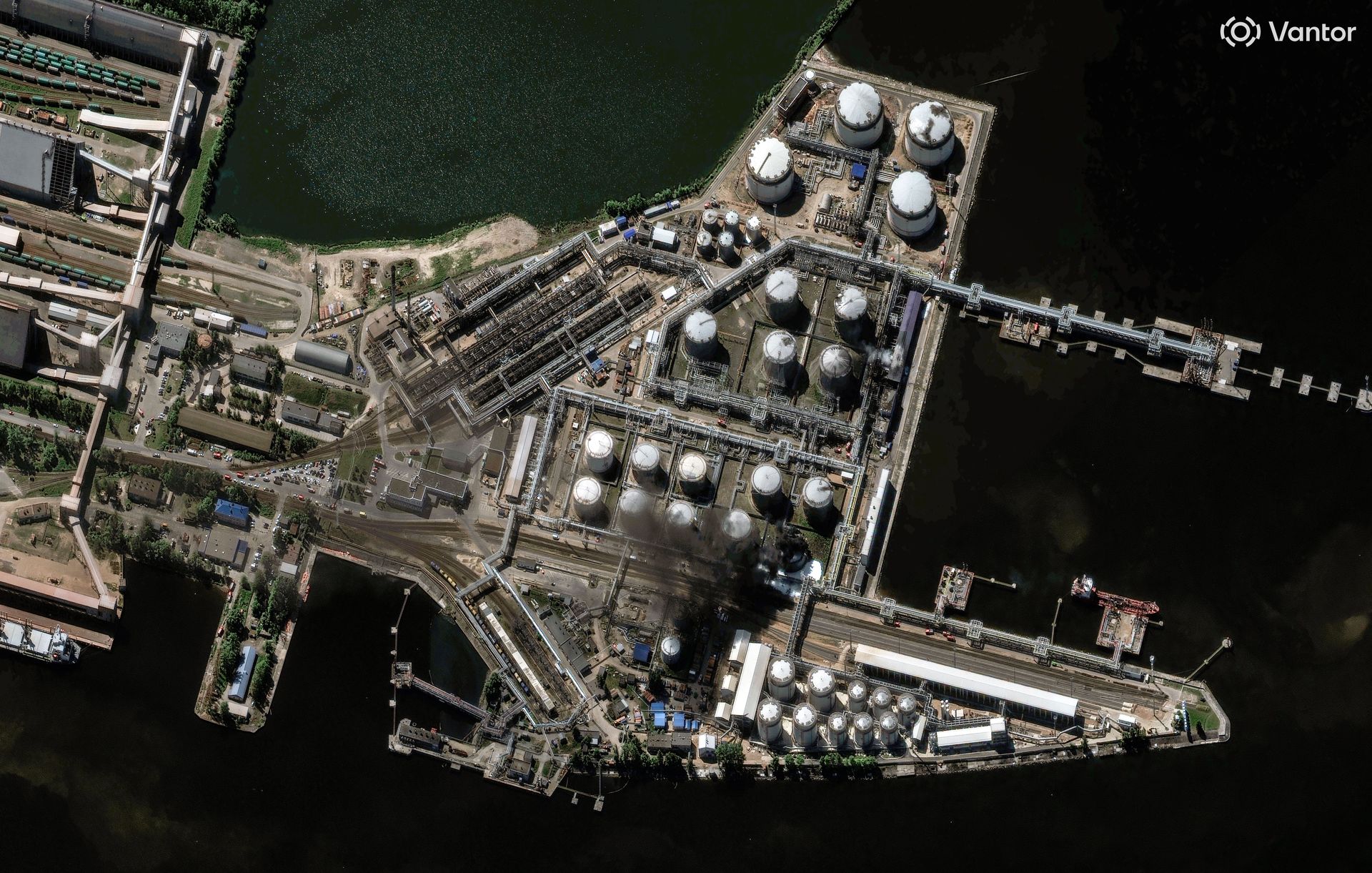
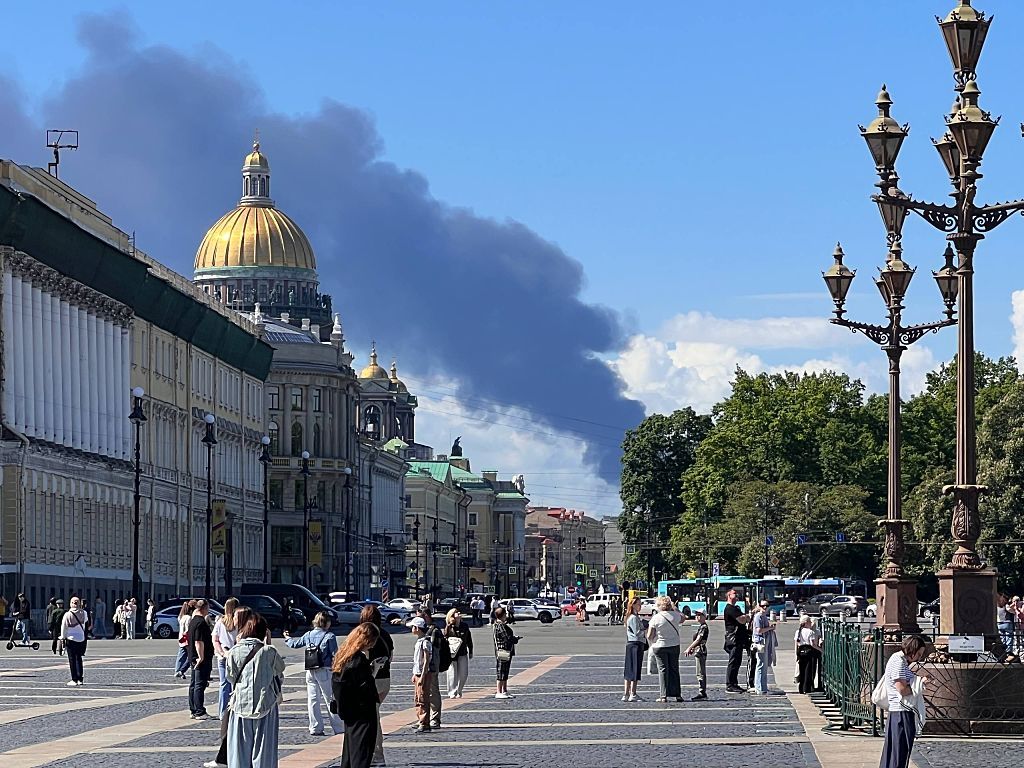
The opening salvo flew roughly 1,100 kilometers — about 680 miles — from Ukrainian territory to reach the St. Petersburg Oil Terminal in Leningrad Oblast, the largest crude-and-products transshipment complex in Russia's northwest. Ukraine's General Staff reported one storage tank destroyed, six damaged, and two technical platforms hit. Footage shot from across the bay showed a column of black smoke visible from St. Isaac's Cathedral, more than 30 kilometers away.
In the same overnight raid, drones reached the Kronstadt naval base in the Gulf of Finland and set fire to the Project 20380 missile corvette Boikiy. SkySat satellite imagery analyzed by Militarnyi shows the ship's mast collapsed and its superstructure — which houses the radars, electronic-warfare gear, and missile-targeting systems that make a corvette useful — burned through. A defense plant in Michurinsk, in the Tambov region 600 kilometers from the border, was also struck. Russia's defense ministry claimed it intercepted 354 drones that night, a figure that, if accurate, only underscores the scale of what Kyiv now sends in a single push.
"No point" at the podium
The St. Petersburg International Economic Forum (SPIEF) is the Kremlin's flagship business showcase, the event Russia uses to signal it is still open for capital despite Western sanctions. Putin used his Friday plenary speech to slam the sanctions regime as self-harming to Europe — and to publicly reject a written offer from Zelensky to meet face-to-face. Zelensky's open letter, the first such public approach since 2022, was "boorish," Putin said, especially after a May 22 Ukrainian drone strike on a college dormitory in Russian-controlled Luhansk that Moscow says killed 21 people. "I see no point in the meeting," he added.
The drone barrage that followed on Saturday looked like a direct reply. Russian officials activated Pulkovo's "Kover" airspace-closure protocol, more than ten flights were delayed or canceled, and a regional defense ministry installation caught fire. St. Petersburg Governor Alexander Beglov said several buildings were damaged but reported no fatalities. Kremlin spokesman Dmitri Peskov said Russia's response would be "systemic" and added that Moscow is "continuing the special military operation precisely so that such strikes do not occur" — a line that lands awkwardly when the strikes keep landing.
Why it matters
St. Petersburg is the city Putin grew up in, the city he uses to sell Russia to the world's executives, and — until this week — a city that felt safely behind the front. Hitting it twice during SPIEF is a political message in the shape of a logistics achievement: Ukraine can now reach almost anywhere in European Russia, and it is choosing to do so during the events Moscow most wants on TV. Estonia, Latvia, and Finland scrambled jets and issued air-raid alerts as the drones transited the Baltic — a reminder that long-range strike warfare is bleeding past Russia's airspace into NATO's.
There is also an economic edge. Russia's oil-export logistics run through a small number of large nodes; degrading the Petersburg terminal compounds domestic fuel shortages that already pushed gas stations in some regions to ration sales to 50 liters per customer. Zelensky has begun calling these operations "long-range sanctions." The counter-argument is that drone strikes on cities, even on military targets in cities, harden Russian opinion and make a negotiated end harder — a real cost that Kyiv appears willing to absorb.
What to watch
Two signals matter in the next week. First, whether the Trump administration — which has been pushing both sides toward a ceasefire and held a Putin summit in Anchorage last year — publicly criticizes the Petersburg strikes or shrugs at them. Second, whether Ukraine extends this deep-strike pattern to Russia's Baltic export terminals at Ust-Luga and Primorsk, the larger crude shipping hubs that, if hit, would move the story from symbolism to oil-price ticker.
Sources
- Ukrainian drones strike a St. Petersburg oil terminal ahead of Putin visit (NPR)
- Drones hit St Petersburg port as Putin hosts major economic forum (The Spokesman-Review / AP)
- Ukrainian drones hit St. Petersburg as key Putin economic forum opens (ABC News)
- Russian Corvette Boikiy Likely Suffers Severe Superstructure Damage (Militarnyi)
- Putin rejects Zelenskyy's offer to meet, saying he sees 'no point' in it (PBS NewsHour)
- Ukraine strikes St. Petersburg Oil Terminal as Putin's Economic Forum opens (Kyiv Independent)